

Every winter, thousands of people buy the wrong snow blower – either overkill for a small driveway or completely underpowered for serious snowfall. The one stage vs two stage snow blower decision comes down to four things: how much snow you get, what surface you’re clearing, how big your area is, and your budget.
Here’s the direct answer: single-stage blowers are best for light-to-moderate snowfall on paved surfaces. Two-stage blowers are built for heavy snowfall, long driveways, and gravel or uneven terrain. Let’s break down exactly why.
Side-by-Side Comparison
| Feature | One-Stage | Two-Stage |
|---|---|---|
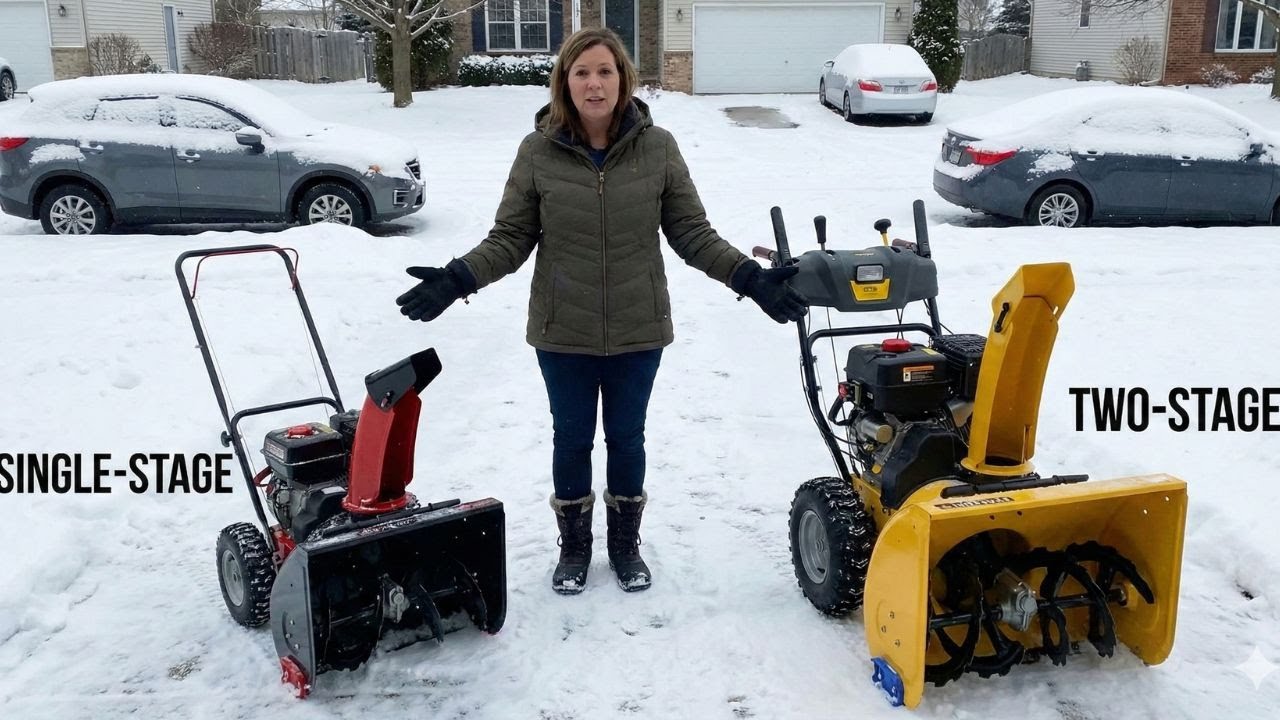
| How it works | Auger contacts ground, scoops and throws snow | Auger gathers snow, impeller throws it |
| Clearing width | 18-22 inches | 24-32 inches |
| Clearing depth | Up to 8-12 inches | Up to 16-23 inches |
| Throw distance | 15-25 feet | 40-60 feet |
| Best surface | Paved (asphalt, concrete) | Paved or gravel |
| Self-propelled | No (push-assisted) | Yes |
| Handles wet/heavy snow | Struggles | Handles it well |
| Weight | 60-90 lbs | 200-350 lbs |
| Price range | $300-$700 | $700-$2,500+ |
| Engine size | 100-200cc | 200-400cc+ |
How Each One Actually Works
One-Stage Snow Blower
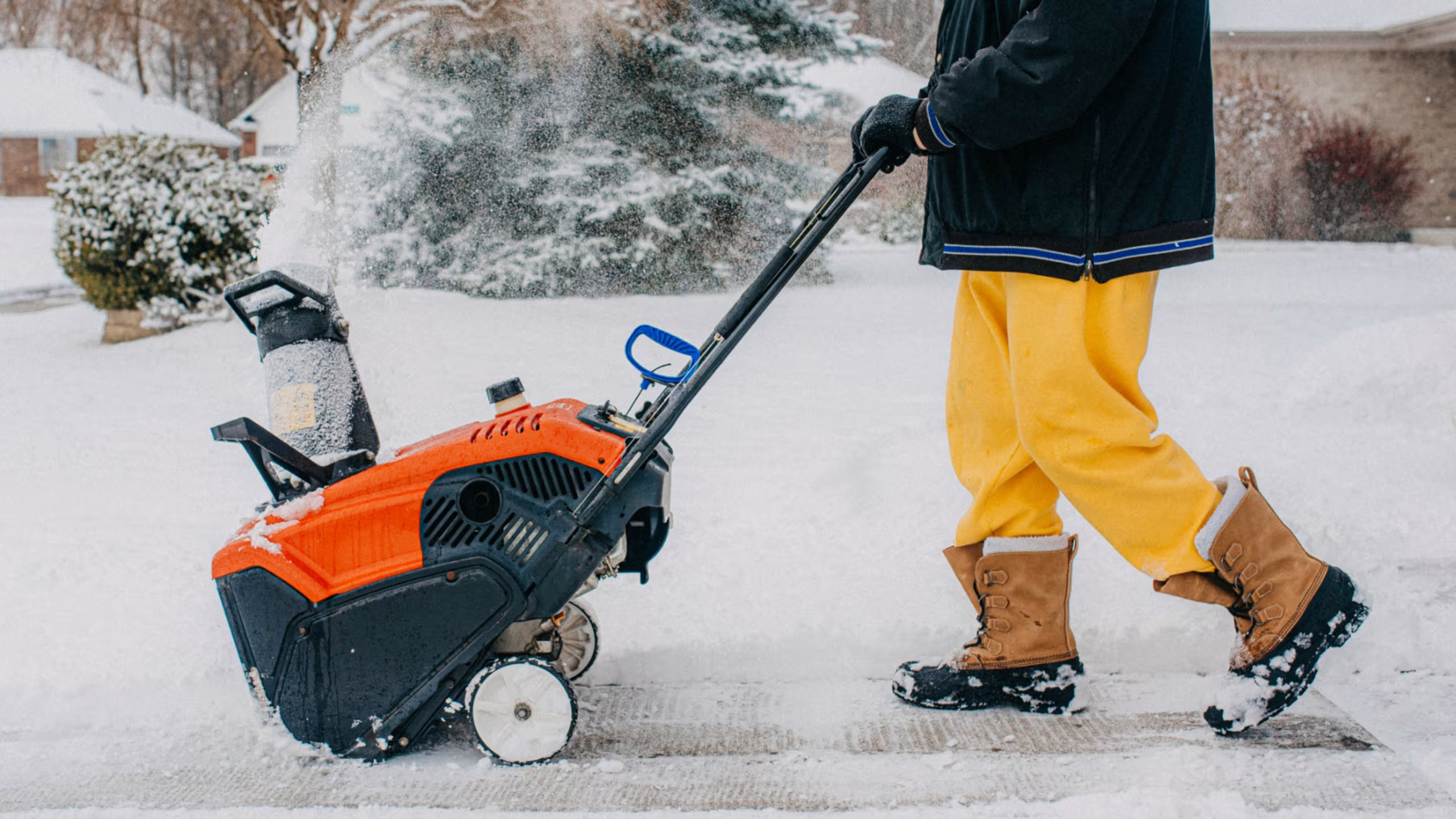
A single-stage machine uses one component – the auger – to do both jobs: pick up the snow and throw it. The auger spins fast and makes direct contact with the ground, which is why it can’t be used on gravel (it’ll throw rocks along with the snow).
Because the auger touches the ground, it also helps propel the machine forward slightly – you push it, but it’s not working against you.
Best for:
- Driveways under 50 feet
- Snowfall under 8 inches at a time
- Paved surfaces only
- Lighter, drier snow
Two-Stage Snow Blower
A two-stage machine separates the process. The auger (stage one) gathers and breaks up the snow. An impeller fan (stage two) then throws it out the chute with much more force and distance.
Because the auger doesn’t touch the ground directly, it works safely on gravel, brick, and uneven surfaces. It’s also self-propelled, meaning you guide it – it pulls itself.
Best for:
- Long or wide driveways
- Snowfall over 8 inches regularly
- Wet, heavy, or compacted snow
- Gravel, dirt, or mixed surfaces
Scenario-Based Recommendations
| Your Situation | Best Choice |
|---|---|
| City townhouse, short paved driveway, under 6″ snow | One-stage |
| Suburban home, 2-car garage driveway, 6-12″ snowfall | Two-stage |
| Rural property, gravel driveway, heavy lake-effect snow | Two-stage |
| Small patio and walkway only | One-stage (or electric) |
| Older homeowner who wants less physical effort | Two-stage (self-propelled) |
| Budget under $500 | One-stage |
The Price Reality
One-stage models from reputable brands (Toro, Ariens, Honda) run $350-$650. They’re compact, easy to store, and reliable for moderate winters.
Two-stage machines start around $700 for entry-level and climb to $2,000+ for commercial-grade models with heated handles, power steering, and LED lights. For most homeowners, the $800-$1,200 range covers everything they’ll ever need.
What Most People Get Wrong
The biggest mistake is buying a one-stage blower to save money, then having it bog down in the first real snowstorm.
Heavy, wet snow – the kind that arrives in late winter – is brutal on single-stage machines. If you live in a region that regularly gets 10+ inch storms or temperatures that cause snow to pack into dense slabs, a one-stage will frustrate you every season.
On the flip side, buying a massive two-stage for a single-car driveway in a city that gets 4 inches three times a year is overkill. You’ll spend more than you need to and wrestle a 300-pound machine into a small garage every time.
The Bottom Line
The one stage vs two stage snow blower decision is really a question of matching the machine to your winter. Know your average snowfall depth, know your surface type, and be honest about your driveway length. Those three factors will point you to the right choice every time – and you’ll stop dreading the first big storm of the season.
