

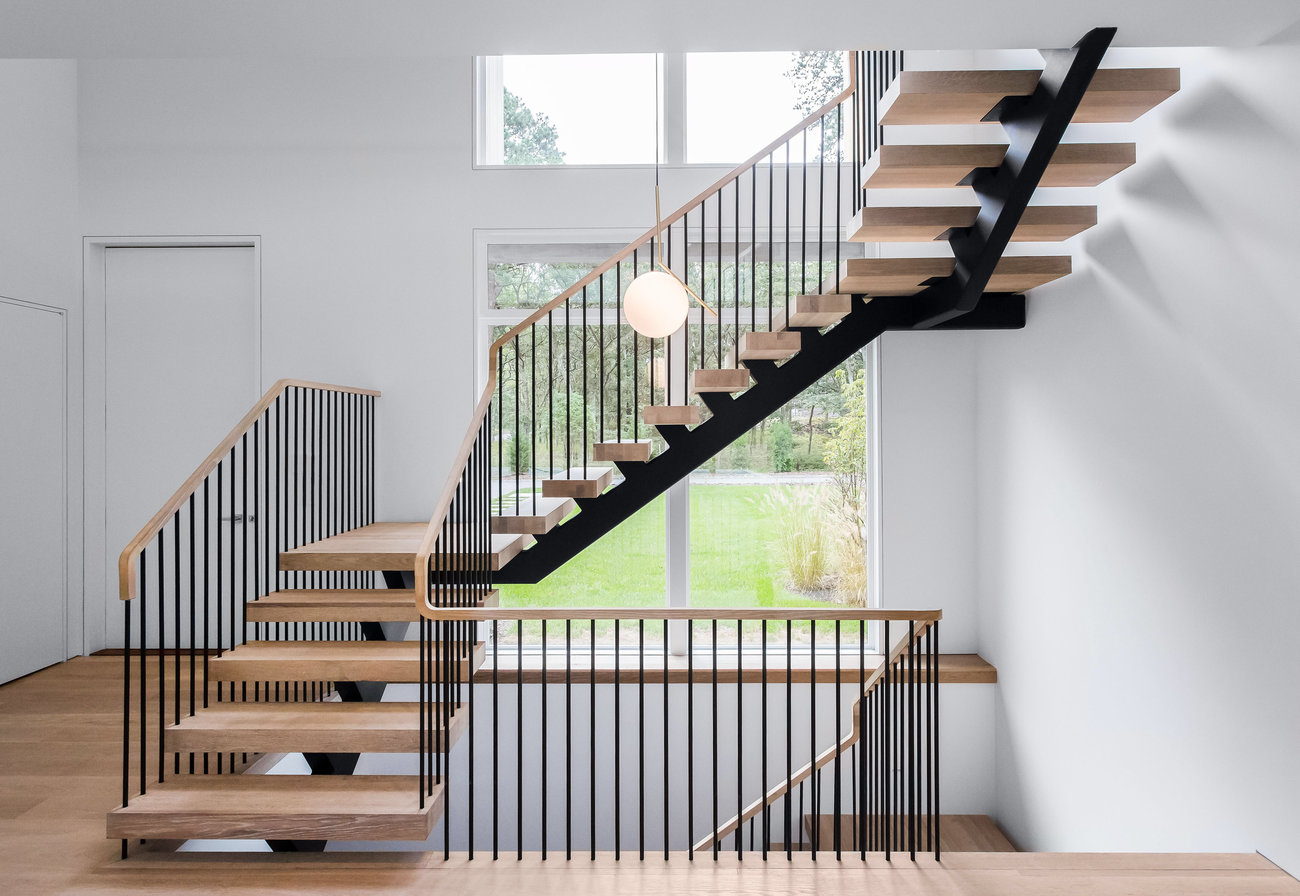
If you’re building or replacing stairs, you need to follow the International Residential Code (IRC). Key 2026 requirements for “code for stairs and railings“ include:
-
Width: Minimum 36 inches clear width.
-
Handrail Height: 34 to 38 inches measured vertically from the stair nosing.
-
Guardrail Height: Minimum 36 inches for any walking surface more than 30 inches above grade.
-
The 4-Inch Rule: Balusters must be spaced so that a 4-inch sphere cannot pass through any opening.
Here are the key requirements you need to know before you build.
Stair Dimensions: IRC Requirements
| Component | Minimum/Maximum | IRC Code Reference |
|---|---|---|
| Stair width | Minimum 36 inches clear | R311.7.1 |
| Riser height | Max 7¾ inches; Min 4 inches | R311.7.5.1 |
| Tread depth | Minimum 10 inches | R311.7.5.2 |
| Nosing projection | ¾” to 1¼” (if tread < 11″) | R311.7.5.3 |
| Headroom clearance | Minimum 6 feet 8 inches | R311.7.2 |
| Consistency | Riser/tread variation max ⅜ inch across entire staircase | R311.7.5 |
The consistency rule is critical and often violated: every single riser in the staircase must be within ⅜ inch of every other riser. One riser that’s even slightly off can cause trips – and will fail inspection.
Handrail Requirements
| Requirement | Code Standard |
|---|---|
| When required | Any staircase with 4 or more risers |
| Height | 34-38 inches above stair nosing |
| Graspability | Must be graspable – round 1¼”-2″ diameter, or equivalent |
| Continuity | Must run full length of stair flight |
| Extensions | Must extend 12″ horizontal at top; one tread width at bottom |
| Clearance from wall | Minimum 1½ inches between rail and wall |
Graspability is commonly missed. A flat 2×4 board used as a handrail is not code-compliant – it can’t be properly grasped in an emergency. The rail must be a profile that allows your hand to wrap around it, or a tested equivalent profile.
Guardrail (Balustrade) Requirements
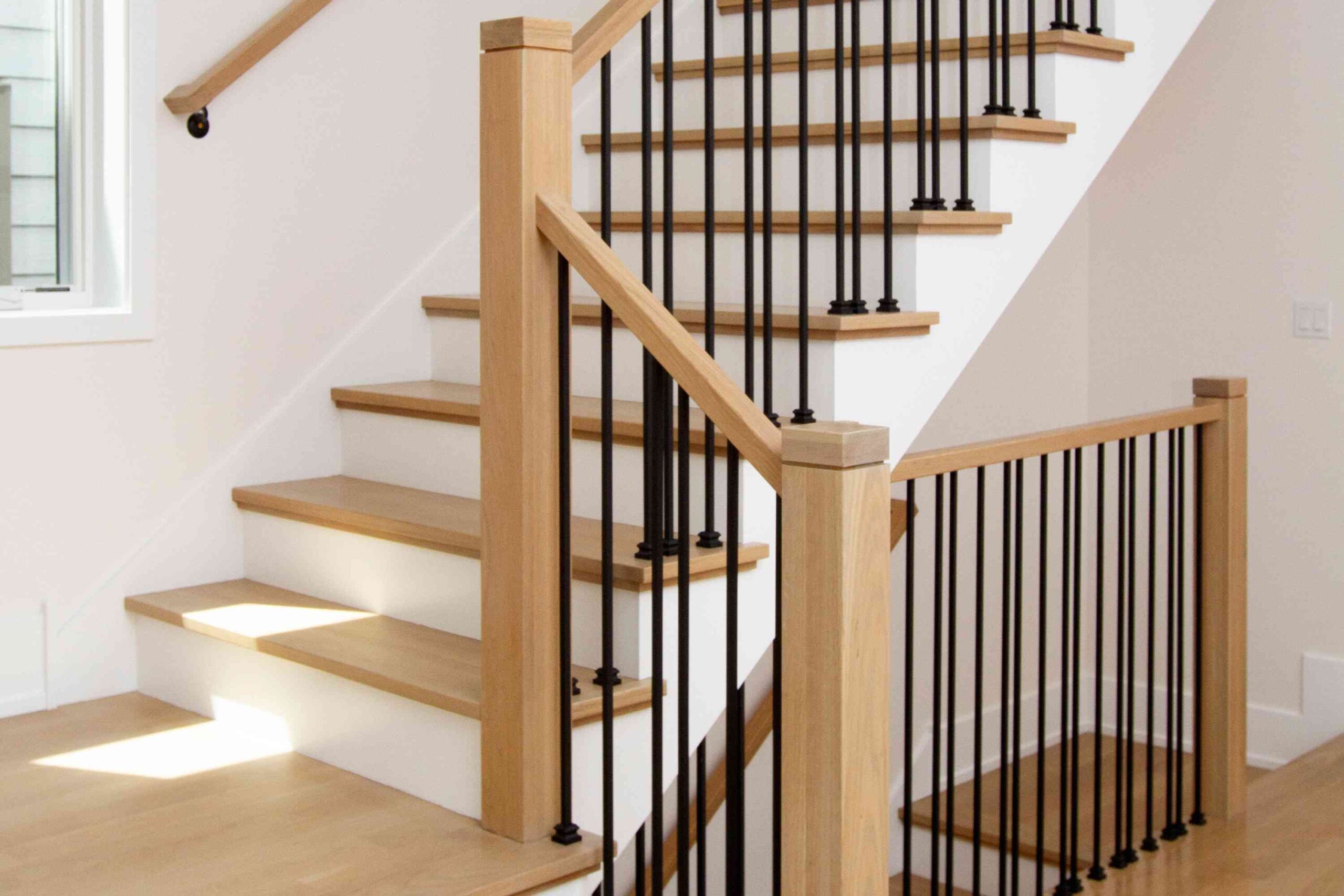
Guardrails are the vertical barrier systems on open sides of stairs and landings – different from handrails, which you hold while walking.
| Requirement | Standard |
|---|---|
| When required | Any surface more than 30 inches above floor/grade below |
| Minimum height | 36 inches (on stairs); 42 inches on elevated platforms/decks |
| Baluster spacing | Max 4 inches between balusters (sphere test) |
| Top rail loading | Must withstand 200 lbs of force |
| Climbability | No horizontal rails that could be used as a ladder by children |
The 4-inch sphere rule for baluster spacing exists to prevent children from getting their heads stuck. Inspectors will check this – sometimes literally with a 4-inch ball.
The no-horizontal-rail rule is why traditional ranch-style horizontal rail fences are no longer code-compliant on elevated residential decks. Horizontal rails create a “ladder” that children can climb over the guardrail.
Common Code Violations to Avoid
| Violation | Why It Fails |
|---|---|
| Inconsistent riser heights | Tripping hazard; variation exceeds ⅜ inch |
| Flat 2×4 handrail | Not graspable per code |
| Missing handrail extension | Must extend past top and bottom of stair run |
| Baluster spacing over 4 inches | Fails 4-inch sphere test |
| Guardrail under 36 inches | Doesn’t meet minimum height |
| Horizontal balusters on deck | Climbable = not code compliant |
| Railing height outside 34-38 inches | Too low or too high |
When You Need a Permit
In most US jurisdictions:
- New stair construction always requires a permit
- Replacing railings on an existing staircase usually requires a permit
- Repairs like replacing a broken baluster may not require a permit
Check with your local building department before starting. Permit requirements vary significantly by municipality.
ADA Considerations
Residential code (IRC) is separate from ADA (Americans with Disabilities Act), which applies to commercial buildings. However, if you’re building for accessibility:
The Bottom Line
The code for stairs and railings isn’t arbitrary – every requirement exists because of documented injury patterns. Riser consistency prevents trips. Graspable handrails make a difference in an emergency. The 4-inch rule protects children. Understanding these standards doesn’t just help you pass inspection – it builds stairs that are genuinely safer for everyone who uses them.
When in doubt, call your local building department. They’re usually happy to answer specific questions before you build rather than after.
